- Personal
- Membership
- Membership
- Rates & Fees
- Checking
- Checking
- Personal Loans
- Personal Loans
- Wealth Management
- Investment Services
- Financial Advisors
- Resource Center
- Business
November 7, 2019
Emergency Funds
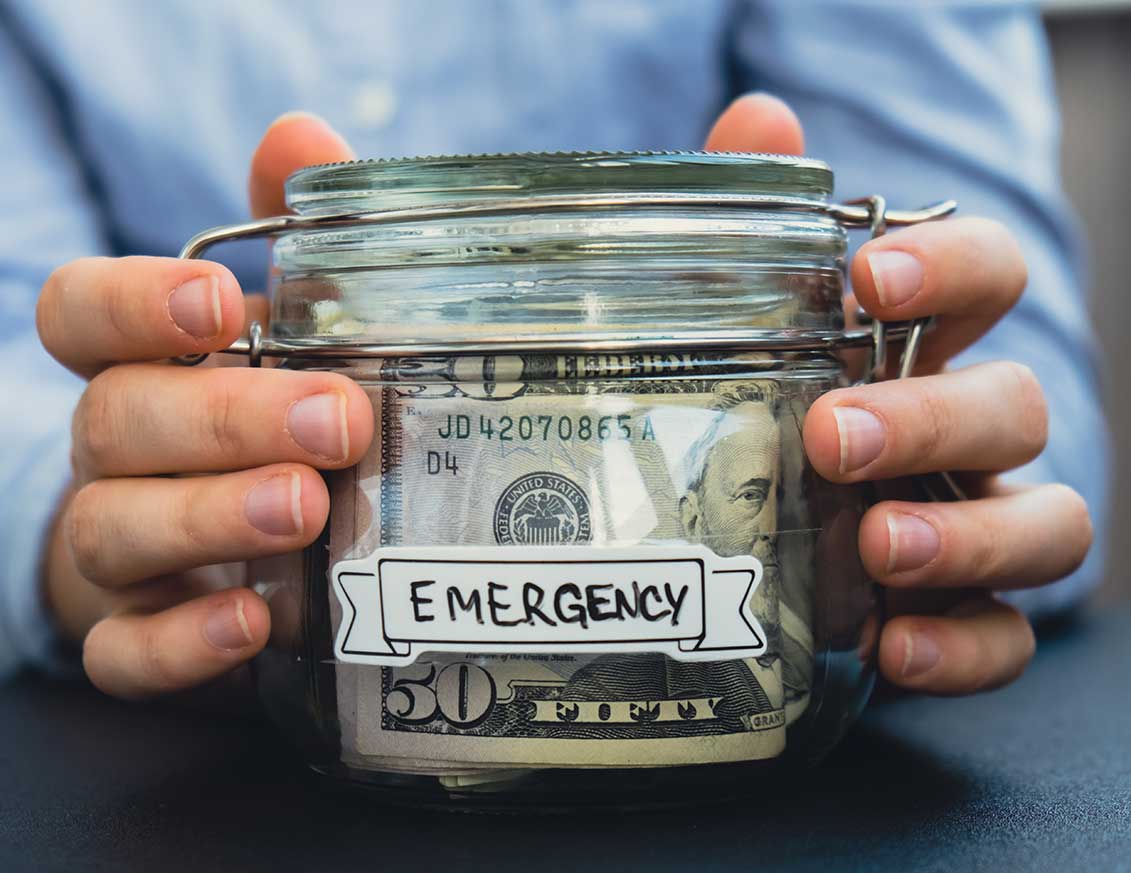
As much as we’d like to pretend otherwise, we all have our spells of bad luck—an unexpected illness, a car accident, a leaky pipe. If you want to get through the inevitable rough patches without breaking the bank, it’s vital to have a robust emergency fund.
Reframe Your Thinking
Your emergency fund is not your general savings account. And it isn’t just telling yourself, “Well, if something happens I’ll be fine because I can pull from here and move some money over there and not buy this…”. An emergency fund needs to be money that will only be used in an emergency.
This money needs to be a set amount kept in a separate account than the rest of your money so that it doesn’t get accidentally spent. It’ll also need to be somewhere you can access quickly when needed. A dedicated savings account is probably the easiest place, but you can also explore other options like multiple CDs or a money market account if those would better suit your preferences.
The Bigger the Better
Experts recommend that your emergency fund be large enough to support your essential needs for at least 3-6 months. That would include rent or mortgage payments, other bills, food, and debt payments. But it’s never a bad thing to have even more saved. Just think how much more security a full year of funding would give you as opposed to just 3 months. How much will be right for you? Use this calculator to figure out where to start.
What About Insurance?
Insurance plays a huge role in keeping you protected when emergencies strike. Health insurance, car insurance, life insurance, and home/renter’s insurance should all be a part of your emergency preparedness plan. But insurance should go along with, not replace, your emergency fund. You never know what kind of emergency you’ll encounter, so you never know how much help your insurance will be able to provide in any given scenario. For example, car insurance is super helpful in an accident, but less helpful if you’re laid off from work unexpectedly.
Plan to Save
When it comes time to start saving, it’s okay to take your time, but you should be doing it purposefully. The 50/30/20 rule can be a great place to start when it comes to saving regularly. With this budgeting method, 50% of your income goes toward needs, 30% toward wants, and 20% to savings. You may choose to put all of the money you save toward your emergency fund or just part of it, but what matters is that you are actively working on building your emergency fund. If you want some help creating a personalized saving plan, try the Saving with a Purpose Coach below.
Disclaimer
While we hope you find this content useful, it is only intended to serve as a starting point. Your next step is to speak with a qualified, licensed professional who can provide advice tailored to your individual circumstances. Nothing in this article, nor in any associated resources, should be construed as financial or legal advice. Furthermore, while we have made good faith efforts to ensure that the information presented was correct as of the date the content was prepared, we are unable to guarantee that it remains accurate today.Neither Banzai nor its sponsoring partners make any warranties or representations as to the accuracy, applicability, completeness, or suitability for any particular purpose of the information contained herein. Banzai and its sponsoring partners expressly disclaim any liability arising from the use or misuse of these materials and, by visiting this site, you agree to release Banzai and its sponsoring partners from any such liability. Do not rely upon the information provided in this content when making decisions regarding financial or legal matters without first consulting with a qualified, licensed professional.
Posted In: General
Explore All The Ways We Can Help You Grow
-
 Article
5 Budgeting Tips to Make Managing Your Finances Easier
Check out five budgeting tips to help make it easier to manage your monthly budget.
Keep Reading About 5 Budgeting Tips to Make Managing Your Finances Easier -
 Article
Five Ways to Support Local Businesses
Discover ways to support local businesses in your community, from trying new places to sharing positive feedback.
Keep Reading About Five Ways to Support Local Businesses -
 Article
Planning For Expenses
Everyone spends money, but many people don't know how to track how much they're spending or how to prioritize it.
Keep Reading About Planning For Expenses