- Personal
- Membership
- Membership
- Rates & Fees
- Checking
- Checking
- Personal Loans
- Personal Loans
- Wealth Management
- Investment Services
- Financial Advisors
- Resource Center
- Business
August 2, 2022
Preparing for a Recession

It’s difficult to know what to expect from a recession and how you’ll be impacted, but there are steps you can take to make sure you feel financially secure during one.
Job Security
When a recession hits, you may worry about your job. This makes sense, of course, employers will sometimes lay people off as a business makes less profit, and new jobs could be harder to find. But you can prepare for the worst to better navigate the financial blow from a sudden loss of income.
Your job security will depend on how the recession is impacting your industry and your role within the company. That means, beyond doing your best at work, a lot of it is out of your control. The best way to protect yourself is to have a well-stocked emergency fund. Your emergency fund should be large enough to cover your basic expenses for three to six months (the more dependents you have the larger your emergency should be).
You’ll want to keep your emergency fund somewhere secure and easy to access. Under your bed is easy to access but not the most secure. A CD is secure but not easy to access. A high interest savings account at a bank or credit union is usually the best place.
Emergency Funds
Emergency funds can be life savers during a recession, but unexpected job loss can happen to anyone. It is important to have an emergency fund recession or not. If you don’t have enough savings to cover an emergency fund now, look at your budget and find areas where you can cut your expenses. It might take a few years to save enough money, but any emergency fund is better than none. For more information, this article can help: Emergency Funds.You can also apply for unemployment. Unemployment is weekly payments provided by the government to help people who have recently lost their jobs. The payment is based on a percent of your previous wages and varies from state to state. It is meant to be short term and requires proof that you are actively seeking new employment.
Here are some other things to consider during a sudden job loss.
- Make sure you have a good resume ready to go. If you haven’t used or needed it in a while, it might be good to update it.
- Lenders often offer ways to reduce payment amounts because of a job loss. Check with them now to see what their options are.
- You can continue your work health insurance plan after you lose your job for a limited time, but you will need to pay the entire premium (the amount you and your employer pay for your insurance every month). This insurance is often referred to as COBRA insurance because it is required by the Consolidated Omnibus Budget Reconciliation Act of 1985.
Retirement Account
Recessions can have a big impact on the money you have set aside for retirement. If retirement is still a way off, just sit tight—you’ll most likely make your money back over several years. If retirement is close and you are concerned about your retirement account, there are some precautions you can take.
IRA and 401k
An IRA is a retirement fund you set up yourself or through your employer. A 401k is always through your employer. They have different rules and limits, but they both have tax protections. These funds are the best place to save for retirement, and it’s recommended to start one if you haven’t already.Most retirement accounts are self directed. This means you have control over how the money is being invested. The number of options and ways to invest can be overwhelming, but it’s worth taking the time to research the best areas to protect your investment during a recession.
Consider meeting with your retirement fund custodian or financial advisor and go over your options such as…
- A stable income fund: a group of stocks designed to minimize risk. Because they are ‘stable,” these stocks will generally fare best, but also have lower rates of returns.
- A fixed income fund: made up of bonds, CDs, and money market funds. These won’t lose value in a stock market crash but can be affected negatively by other elements of a financial storm like raising interest rates and inflation.
- Commodities like gold, which tend to do well during a recession.
No investment is risk free, especially during a recession. It might be tempting to take the money out of your retirement account early, but this is generally not a good idea. You are penalized for the money you take out early and won’t have the same tax protection if you reinvest that money later. You might pay more in fees, penalties, and taxes than you would lose in the market.
Budget and Debt
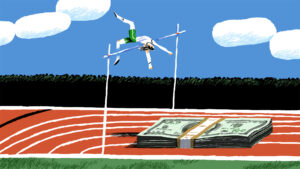
A recession may cause prices to rise in unexpected ways—you might see higher rent, gas prices, or costs overall. Having wiggle room in your budget will prepare you for these price hikes. If you can handle prices rising 10%, you’ll be prepared for most situations.
 Sergiy Maidukov
When looking at your budget, reducing your debt will make a big difference. The lower your debt, the lower your monthly expenses, and every dollar you put towards debt could be put toward your emergency fund, investments, and flexibility in your budget. You don’t have to eliminate all your debt to handle a recession, but the more you do, the easier it will be.
Reducing Your Debt.
There are different kinds of debt and different approaches you can take to reduce your debt. A mortgage is different from a credit card, and you will want to make a plan to pay off high interest debt first. Check out this article for more information: How to Manage Your Debt.If you have your debt under control, you might have access to a large amount of credit, but this shouldn’t be a replacement for an emergency fund or flexible budget. Relying on debt to get you through a difficult financial situation only sets you up for more financial difficulties in the future.
Preparing for a recession also prepares you for other financial hardships. The stronger your financial foundation, the easier a recession will be. If you want to take a more personal look at your situation, this Coach can help.
Disclaimer
While we hope you find this content useful, it is only intended to serve as a starting point. Your next step is to speak with a qualified, licensed professional who can provide advice tailored to your individual circumstances. Nothing in this article, nor in any associated resources, should be construed as financial or legal advice. Furthermore, while we have made good faith efforts to ensure that the information presented was correct as of the date the content was prepared, we are unable to guarantee that it remains accurate today.Neither Banzai nor its sponsoring partners make any warranties or representations as to the accuracy, applicability, completeness, or suitability for any particular purpose of the information contained herein. Banzai and its sponsoring partners expressly disclaim any liability arising from the use or misuse of these materials and, by visiting this site, you agree to release Banzai and its sponsoring partners from any such liability. Do not rely upon the information provided in this content when making decisions regarding financial or legal matters without first consulting with a qualified, licensed professional. This article does not offer professional tax advice. Contact a tax advisor for more details.
Posted In: General
Explore All The Ways We Can Help You Grow
-
 Article
Business Continuity and Emergency Risk Management At Grow: Protecting Your Money
At Grow, we prioritize business continuity and emergency risk management as we work to keep your money and personal information safe.
Keep Reading About Business Continuity and Emergency Risk Management At Grow: Protecting Your Money -
 Article
Wills
You need a legal will to make sure your estate is handled the way you wish after you die.
Keep Reading About Wills -
 Article
5 Tips to Save Money on Holiday Shopping in 2025
We have five tips to help you save money on holiday shopping — without skimping on the joy or the fun.
Keep Reading About 5 Tips to Save Money on Holiday Shopping in 2025